
Flat Clearance Elephant and Castle — Health and Safety Policy
Purpose and scope: This health and safety policy sets out how our flat clearance and rubbish removal teams operate to protect staff, clients and the public. It applies to all activities carried out by the company in the service area, including waste removal, domestic and commercial rubbish clearance, and associated transport and storage. The policy ensures legal compliance and promotes best practice for safe clearance of household and site waste.
 This document defines responsibilities, risk management and operational controls. Key objectives include preventing injury, reducing environmental harm, and ensuring efficient rubbish collection and disposal. The policy supports staff competence, appropriate use of equipment, and continuous improvement through audits and reviews.
Responsibilities and accountability
Management is responsible for establishing safe systems of work and allocating resources for training, personal protective equipment (PPE), and risk assessments. Supervisors must ensure teams follow safe procedures for flat clearance, bulky waste removal and hazardous item handling. Employees are required to report hazards, follow instructions, and use PPE correctly to ensure collective safety.
 Risk assessments are completed before work begins on each site. They identify manual handling hazards, falls from height, exposure to sharp objects or hazardous substances, and traffic or vehicle risks during waste collection. Controls include mechanical aids, team lifting techniques, secure storage of removed items, and clear exclusion zones around operations.
Training, PPE and competence
All staff receive training in safe rubbish clearance methods, manual handling, fire awareness and first aid basics. Training is regularly refreshed and documented. PPE such as gloves, high-visibility clothing, safety boots and eye protection are supplied and must be worn where required. Specialized PPE is used for hazardous waste handling and sharps removal.
Safe equipment use is enforced: vehicles, trolleys, sack trucks and lifting aids are inspected and maintained. Staff competency is reviewed through toolbox talks, observations and periodic practical assessments to ensure consistent, safe waste removal operations.
Operational procedures are established for common clearance tasks. These include:
- Site assessment and client property protection prior to clearance;
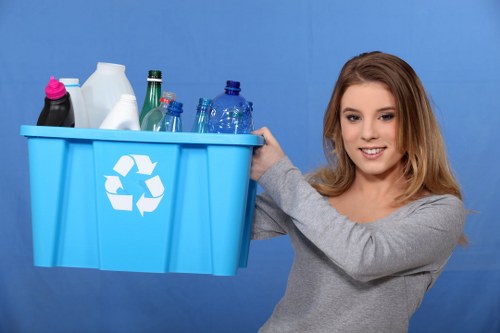
- Segregation of recyclable materials and safe containment of hazardous items;
- Controlled loading procedures to prevent overloading and secure transport of bulky waste.
Vehicles used for rubbish collection are checked daily for roadworthiness and secure load restraint. Drivers follow traffic management measures and parking protocols to minimise risk to pedestrians and other road users.
 Emergency procedures and incident reporting: all staff must know how to respond to injuries, fires, chemical spills or hazardous finds during clearances. Incidents, near-misses and unsafe conditions are reported immediately and investigated. Corrective actions are implemented to prevent recurrence and shared with teams as part of continuous learning.
Contractor and third-party management: any contractors or subcontractors engaged for specialized disposal or hazardous waste tasks must demonstrate equivalent safety standards. Agreements specify responsibilities, required permits and safe operating practices to align with the company’s policy for waste clearance services.
 Monitoring, audit and review: the policy is supported by regular inspections, performance reviews and health and safety audits. Records of training, risk assessments, equipment maintenance and incident reports are maintained. The policy is reviewed annually or after significant changes to operations to ensure it remains effective for all rubbish removal and flat clearance activities.
Commitment to wellbeing and environmental consideration: we commit to protecting the health of staff and the public while promoting responsible waste handling and recycling. Measures to reduce environmental impact include prioritising reuse, segregation for recycling and safe disposal of hazardous items according to regulatory guidance.
Communication and consultation: safety information is communicated through briefings, signage, and written procedures. Staff are encouraged to contribute suggestions for safer working practices and to participate in risk assessment reviews to ensure practical, front-line safety improvements.
Implementation statement: the company will ensure this health and safety policy is accessible to all employees and implemented consistently across our flat clearance and rubbish collection operations. Regular review cycles, proactive training, and clear responsibilities will sustain a safe working environment for everyone involved in waste clearance and removal services.