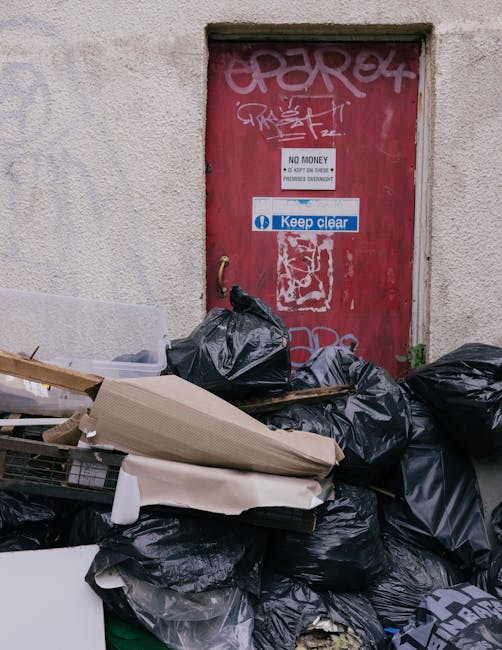
Rubbish removal guide for Walworth Road Elephant and Castle
If you live, work, or manage a property near Walworth Road in Elephant and Castle, rubbish can build up fast. A few old bits of furniture here, a bag of builder's waste there, and suddenly you are staring at a hallway, yard, or basement that feels harder to tackle than it should. This Rubbish removal guide for Walworth Road Elephant and Castle walks you through the sensible options, what to expect, and how to avoid the usual headaches. Whether you are clearing a flat, dealing with post-renovation debris, or just trying to get your space back, the goal is simple: make the job quicker, safer, and a lot less stressful.
Walworth Road has its own rhythm. Busy pavements, flats above shops, limited parking, and the occasional "where on earth do I put this?" moment. So the best rubbish removal approach is rarely the one that looks easiest on paper. It is the one that fits the property, the waste type, and the access you actually have on the day.
Below, you will find a practical local guide covering process, benefits, common mistakes, compliance, and a realistic way to choose the right method. No fluff. Just the stuff people usually wish they had known earlier.
Table of Contents
- Why rubbish removal matters on Walworth Road
- How rubbish removal works
- Key benefits and practical advantages
- Who this guide is for
- Step-by-step guidance
- Expert tips for better results
- Common mistakes to avoid
- Tools, resources and recommendations
- Law, compliance, standards, and best practice
- Options and comparison table
- Case study or real-world example
- Practical checklist
- Conclusion
- Frequently asked questions
Why rubbish removal matters on Walworth Road
Rubbish removal is not just about appearances, though let's face it, a tidy frontage makes a big difference. It is also about keeping access safe, reducing odours and pests, avoiding trip hazards, and making sure waste goes to the right place. On a road like Walworth Road, where people move quickly and properties are often compact, rubbish can spill into the way faster than you expect.
For residents, the bigger issue is often space. Flats near Elephant and Castle can be tight on storage, with bin areas that fill up quickly or awkward access that makes DIY disposal a pain. For businesses, especially shops, offices, and small hospitality spaces, waste can affect day-to-day operations and how customers see you. Nobody wants a tidy counter and a cluttered back entrance. That contrast is a bit awkward, to say the least.
For landlords and managing agents, the stakes are even more practical. End-of-tenancy clearances, fly-tipped items, abandoned furniture, and builders' leftovers can delay re-let timelines and create extra clean-up work. In those situations, reliable waste removal is less of a nice-to-have and more of a housekeeping necessity.
If your rubbish is mixed, bulky, or awkward to move, it is worth thinking beyond a quick bin run. Services such as general waste removal, flat clearance, and home clearance are often better suited to the kind of access and volume found in this part of London.
Expert summary: On Walworth Road, the smartest rubbish removal plan is the one that matches your access, waste type, and timetable. That usually saves more time than trying to "do it all in one go."
How rubbish removal works
In practice, rubbish removal usually starts with a quick assessment of what needs to go. The main questions are simple: what type of waste is it, how much of it is there, how easy is it to reach, and does anything need special handling? Once those basics are clear, the job becomes easier to plan.
A good provider will normally want to know whether the waste is general household rubbish, old furniture, appliances, garden waste, builder's rubble, office junk, or a mix of everything. A mixed load can be cleared efficiently, but it needs sorting and care. A fridge, for example, is not treated the same way as a broken chair. And hazardous material is a different story again.
For local properties around Elephant and Castle, access can shape the whole job. Is the waste on the fourth floor? Is there a narrow stairwell? Can a vehicle stop nearby, or does the crew need to carry everything out by hand? These practical details matter a lot. They affect timing, manpower, and the overall ease of the clearance.
Many people also weigh up whether they need a one-off collection or something more structured. If the work involves ongoing commercial waste, a service like business waste removal may be the better fit. If the mess is tied to a refurbishment, builders' waste clearance is usually the more sensible route. And if the task is to dispose of a few heavy items, furniture disposal can be more efficient than dragging everything to the kerb and hoping for the best.
Truth be told, the biggest time-saver is clarity. The more clearly you describe the waste, the less likely you are to end up with delays, extra trips, or awkward surprises on collection day.
Key benefits and practical advantages
There are plenty of reasons people choose professional rubbish removal instead of handling everything themselves. Some are obvious. Some only become obvious after you have wrestled a sofa down three flights of stairs and realised your back has a strong opinion about it.
- Less lifting and strain: Heavy or bulky items are removed without you having to carry them through tight spaces.
- Faster turnaround: A planned collection can clear a space far more quickly than piecemeal DIY trips.
- Better sorting: Different waste types can be separated properly rather than mixed into one questionable pile.
- More suitable for local access: Walworth Road properties often have limited parking or awkward access, so a managed collection helps.
- Reduced disruption: The job is handled in a way that causes less disturbance to neighbours, staff, or customers.
- More flexible for mixed loads: Furniture, appliances, cardboard, rubble, and general waste can often be dealt with in one coordinated clearance.
There is also a less glamorous but very real benefit: peace of mind. When waste is removed properly, you are not left wondering whether it was disposed of correctly, whether you will trip over it again, or whether it will keep sitting in a corner for another month. That mental relief matters more than people admit.
If you are comparing options, it may help to look at related services such as furniture clearance, mattress and sofa disposal, and fridge and appliance removal. These are especially useful where the rubbish is bulky, awkward, or hard to transport safely.
Who this guide is for and when it makes sense
This guide is useful for anyone dealing with waste near Walworth Road, but some situations come up again and again.
- Tenants moving out: When you need to clear unwanted bits quickly before handover.
- Homeowners decluttering: For lofts, garages, spare rooms, sheds, or general end-of-year sorting.
- Landlords and agents: For end-of-tenancy clearances or abandoned items.
- Shop and office managers: For old furniture, packaging, IT clutter, or stockroom build-up.
- Builders and tradespeople: For rubble, plasterboard offcuts, timber, and mixed renovation debris.
- People handling a bereavement or family move: When the task is emotionally heavy as well as physically demanding.
Sometimes the decision is obvious. You open a cupboard, see six broken bag holders, a fan from 2014, and a box marked "miscellaneous," and you know the time has come. Other times it is less clear. If the waste is small, dry, and easy to carry, DIY disposal may work. If it is bulky, mixed, or too much for your building's bins, a removal service is usually the better option.
For larger clearances, a broader service such as house clearance or office clearance may fit better than piecing everything together. That is often the case with multi-room properties or commercial spaces where clutter has built up over time.
Step-by-step guidance
If you want the process to be smooth, it helps to break it down. Here is a practical way to approach rubbish removal on or around Walworth Road.
- Sort the waste by type. Separate general rubbish, furniture, electricals, garden waste, builder's waste, and anything potentially hazardous.
- Identify awkward items. Bulky sofas, broken fridges, mattresses, and heavy cabinets usually need special handling.
- Check access. Note staircases, lifts, narrow hallways, rear access, parking restrictions, and any loading challenges.
- Take a quick inventory. A rough list or a few photos can be very helpful. It avoids vague descriptions like "just a bit of stuff," which, to be fair, rarely means just a bit of stuff.
- Choose the right disposal route. Decide whether you need a general clearance, a specialist service, or a mixed-load collection.
- Prepare the items. Place waste in one area if possible, and keep walkways clear for safe removal.
- Confirm what should stay. It sounds basic, but accidental removal of paperwork, tools, or sentimental items happens more often than people think.
- Ask about recycling and handling. Good practice is to separate reusable and recyclable items where possible.
A small but useful tip: if your rubbish is spread across several rooms, start with the biggest items first. That creates visible progress and usually makes everything else feel less daunting. Once the bulky pieces go, the rest looks manageable. Funny how that works.
If the job includes clutter from storage spaces, you may also want to look at loft clearance or garage clearance. Those spaces tend to collect all the odd pieces no one wants to deal with until it becomes unavoidable.
Expert tips for better results
There are a few habits that make rubbish removal much easier, especially in a busy London location.
- Be precise about the waste mix. A clearance of mixed junk is very different from a clearance of one sofa and a few bags.
- Take photos before booking. This helps with planning and avoids underestimating the load.
- Keep pathways open. If the crew has to step over clutter to reach more clutter, the job slows down fast.
- Label what is not going. A simple "keep" note on boxes or bags can prevent accidental removal.
- Think about timing. Early morning collections can be easier if the road gets busier later in the day.
- Separate recycling where practical. Cardboard, metals, and reusable items are easier to manage when not buried under everything else.
In our experience, the best results come from customers who treat the clearance as a small project rather than a heroic last-minute rescue. A bit of prep goes a long way. And honestly, it is less stressful than finding yourself ankle-deep in old packaging at 8 a.m. on a wet Tuesday.
If you are dealing with a deeper clean-out, combining services can make sense. For example, a property refresh might involve furniture clearance plus home clearance, while a workplace refit might need office clearance alongside confidential shredding for sensitive paperwork.
Common mistakes to avoid
A lot of rubbish removal problems are avoidable. The tricky part is that they usually look minor at the start.
- Leaving sorting until collection day: Mixed waste takes longer to assess and may create delays.
- Underestimating volume: One small pile can quietly turn into two van loads. It happens.
- Ignoring access issues: Parking and loading restrictions near Elephant and Castle can change the practical plan.
- Mixing regular waste with restricted items: Some items need separate handling.
- Forgetting about hidden spaces: Cupboards, under-stair areas, and storage corners often contain more than expected.
- Assuming everything is recyclable: Some items need specialist treatment or separate disposal routes.
- Not checking the final room: This one sounds tiny, but it is how keys, documents, and chargers get left behind.
One more thing: do not wait until the waste is blocking normal movement. If you are already stepping around it every day, the job is overdue. A cluttered space tends to create more clutter. That is just how it goes.
For heavier or less straightforward waste, it is worth reviewing specialist options such as builders' waste clearance or hazardous waste disposal. Not every item belongs in the same stream, and some materials need more care than a standard collection.
Tools, resources and recommendations
You do not need a huge toolkit to organise rubbish removal, but a few practical items help.
- Strong gloves: Useful for sharp edges, dusty items, and general handling.
- Heavy-duty bags or boxes: Better for loose waste than thin carrier bags that split halfway down the stairs.
- Tape and labels: Helpful for marking keep items, recycle piles, or fragile objects.
- Dust sheets or old blankets: Handy when moving furniture through hallways or down stairwells.
- A phone camera: Photos help with planning, especially where access is tight or the load is mixed.
On the planning side, it helps to understand what can and cannot go together. If you are considering a skip, the page on what can go in a skip is a useful reference point for common do's and don'ts. That said, a skip is not always ideal on a road like Walworth Road if space is limited or access is awkward.
For people who want to be more environmentally mindful, the site's recycling and sustainability information is worth reading. It is a good reminder that not every item needs to be treated as waste if it can be reused or diverted responsibly.
If you are arranging payment or want to understand how service terms are handled, payment and security and the terms and conditions pages are sensible places to review before booking. A bit of admin now can save awkwardness later. Not glamorous, but useful.
Law, compliance, standards, and best practice
Waste removal in the UK is not something to treat casually. You do not need to become a compliance expert, but you should understand the basic expectations. Duty of care matters. Waste should be stored, handled, and passed on responsibly, and hazardous items should be separated from general rubbish.
For households, the main concern is using reputable disposal methods and not dumping waste illegally. For businesses, the expectations are even firmer, because commercial waste needs proper management and documentation in line with normal industry practice. If you run a shop, office, or other business near Walworth Road, keeping a clear record of waste handling is simply good housekeeping.
Special items need extra care. Refrigerators, electronics, mattresses, sofas, and certain construction materials may require dedicated handling. The same is true for anything that could be harmful, messy, or difficult to process. When in doubt, treat it as a separate category rather than a general bin item.
It is also wise to think about safety standards on site. Lifting, carrying, and moving bulky objects through shared entrances can create risk. Services that prioritise safe handling and insured operations, such as insurance and safety and the health and safety policy, show the sort of approach you should expect from a well-run operation.
Best practice is straightforward: identify the waste correctly, use the right disposal route, and keep people safe while the work is being done. That is really the heart of it.
Options and comparison table
Different rubbish removal methods suit different situations. The best choice depends on volume, access, waste type, and how quickly you need the space back.
| Option | Best for | Strengths | Limitations |
|---|---|---|---|
| DIY disposal | Small, light loads | Low direct cost, flexible timing | Time-consuming, labour-heavy, limited by vehicle space |
| Skip hire | Predictable volume of waste | Good for longer projects, handy for mixed debris | Needs space, can be awkward on busy roads |
| Man and van rubbish removal | Bulky or mixed loads | Fast, flexible, less lifting for you | Usually better for one-off clearances than ongoing waste |
| Specialist clearance service | Furniture, appliances, offices, lofts, or builders' waste | More tailored to the waste type and access issues | Needs a clear brief to price accurately |
For many Walworth Road properties, the man-and-van style approach or a targeted clearance service is the most practical. It handles stairs, narrow halls, and tight time windows better than a bigger, more static solution. But if you have a straightforward project with room for a skip, that may still be the cleanest fit. It really depends on the layout.
If your job is more about renovation debris, take a look at builders' waste clearance. If it is more about furniture refreshes, furniture disposal can be the more direct route.
Case study or real-world example
Picture a typical flat near Walworth Road: two bedrooms, a narrow stairwell, and a mix of old wardrobe panels, a broken desk chair, half a dozen bin bags, and a fridge that has been sitting in the kitchen long enough to become part of the scenery. Nothing dramatic. Just one of those clear-outs that keeps getting postponed because each individual item looks manageable.
The resident starts by sorting what can stay, what can be donated, and what needs to go. Then the bulky items are gathered near the entrance, the hallway is cleared, and photos are taken so the load can be assessed properly. The fridge and sofa are identified separately. The result is a quicker collection, less back-and-forth, and no awkward surprise when the crew arrives.
That is a very normal pattern. The job looks bigger before it gets started than it does after the first two large items are out of the way. Once the space opens up, people usually feel the pressure drop almost immediately. You can hear the room again. Sounds odd, but it is true.
For a business example, think of a small office clearance after a layout change. Desks, chairs, boxes of old files, and a few electrical items need removing without interrupting staff. In that case, an office clearance combined with confidential shredding is far more practical than trying to handle everything in-house over several days.
Practical checklist
Use this checklist before you book or start the job.
- Have I identified all the items that need to go?
- Have I separated general waste from furniture, appliances, and hazardous items?
- Do I know whether access is easy, tight, or likely to need extra planning?
- Have I checked for anything that should be kept, not removed?
- Have I taken photos or made a short list of the load?
- Do I know whether the collection is one-off or part of a larger clearance?
- Have I considered recycling, reuse, or donation where appropriate?
- Have I thought about timing, parking, and building access?
- Do I understand the likely service type I need?
- Have I reviewed the provider's terms, safety approach, and payment details?
If you can tick most of those off, you are in good shape. If not, do the prep first. It will pay off.
A good next step for many readers is to review the broader service options, including house clearance, flat clearance, or general waste removal, depending on what kind of load you are dealing with.
Conclusion
Rubbish removal on Walworth Road is rarely just about moving bags from one place to another. It is about making a space usable again, handling the waste safely, and choosing a method that suits local access and real-life conditions. Once you look at the job that way, the best route usually becomes clearer.
If your rubbish is bulky, mixed, hard to carry, or simply too much for a quick DIY run, a planned clearance can save time, reduce stress, and help you avoid mistakes that cost more later. If you need a more specialised route, there are also practical options for furniture, appliances, builders' waste, offices, lofts, and garden waste. Small job or big one, the key is matching the solution to the mess.
Get a free quote today and see how much you can save.
And if you are still standing in the middle of the room wondering where to begin, that is fine too. Start with one bag, one chair, one corner. The rest tends to follow.
Frequently Asked Questions
What is the best rubbish removal option for a flat on Walworth Road?
For many flats, a flexible clearance service works better than trying to move everything yourself. Tight stairwells, limited parking, and mixed waste can make a simple van collection or flat clearance more practical than DIY disposal.
Can I mix furniture, bags of rubbish, and appliances in one collection?
Often yes, but it depends on the type of items. Mixed loads are common, yet appliances, mattresses, and some bulky items may need to be handled separately or priced differently. Always describe the load clearly.
How do I know if I need builders' waste clearance instead of general waste removal?
If the waste is mostly rubble, timber, plasterboard offcuts, packaging from works, or renovation debris, builders' waste clearance is usually the better fit. General waste removal is more suited to household or mixed light clutter.
Is skip hire a good idea near Elephant and Castle?
It can be, but only if you have enough space and the project suits a static container. On busier streets or in properties with awkward access, a collection-based service may be simpler and less disruptive.
What should I do with old sofas, mattresses, or fridges?
Those items are best treated as specialist disposal items rather than ordinary rubbish. They are bulky, awkward, and not always suitable for standard bin routes. Dedicated services for sofa, mattress, or appliance removal are usually the cleaner option.
Can rubbish removal help if I am clearing a rented flat before moving out?
Yes. End-of-tenancy clearances are one of the most common reasons people book rubbish removal. It helps remove unwanted furniture, bags, and leftover items quickly so the property is ready for inspection or cleaning.
Do I need to sort recyclable items before collection?
You do not always need to sort everything perfectly, but separating recyclable material where practical is helpful. It makes handling easier and supports better waste diversion. A bit of sorting often saves time.
What if I have hazardous waste or something I am unsure about?
Put it aside and do not mix it with normal rubbish until you know how it should be handled. Hazardous waste needs extra care, so it is better to identify it early than deal with it at the last minute.
How far in advance should I arrange rubbish removal?
As early as you can if the job involves bulky items, access issues, or a moving deadline. Simple clearances can often be arranged more quickly, but a bit of notice helps with planning and reduces stress.
Will rubbish removal damage my walls, stairs, or flooring?
It should not, provided the team is careful and the space is prepared properly. Removing large items through narrow passages always carries some risk, which is why protective handling and clear access matter so much.
What is the difference between house clearance and home clearance?
In everyday use, people often mean similar things. House clearance usually suggests a fuller property clearance, while home clearance can sound slightly broader or more general. The useful distinction is really about the scale and type of waste.
How can I get the best value from rubbish removal?
Be precise about what needs to go, group items together, clear access routes, and choose the service that matches the waste type. That combination usually gives the smoothest result and avoids paying for unnecessary extra work.
For more detail on related services, you may also want to review pricing and quotes and about us to understand the approach behind the service. The small details matter, especially when the space is tight and the job needs doing properly.
Sometimes the easiest path is simply the calmest one. Clear the clutter, choose the right help, and let the room breathe again.